Today, I am at the ISTE conference in Philadephia, attending a session on Infographics. I have already blogged about my excitement to attend this session, so you can imagine my surprise that as I sit here, Kathy Schrock is not leading it. Hmm...I guess I will figure it out later. Instead, this post will be composed of my notes. Here is the Google Page set up for the session. So, according to the nice lady next to me, Kathy Schrock's infographics session was YESTERDAY and this is yet another one. Oh. This one is led by Jane Krauss (a project based learning specialist) and Diana Laufenberg.
There are a LOT of iPads here, a whole bunch of sleek tablets. I'm plunking away on my eeePC netbook trying not to feel like the poor kid in my dollar store sneakers.
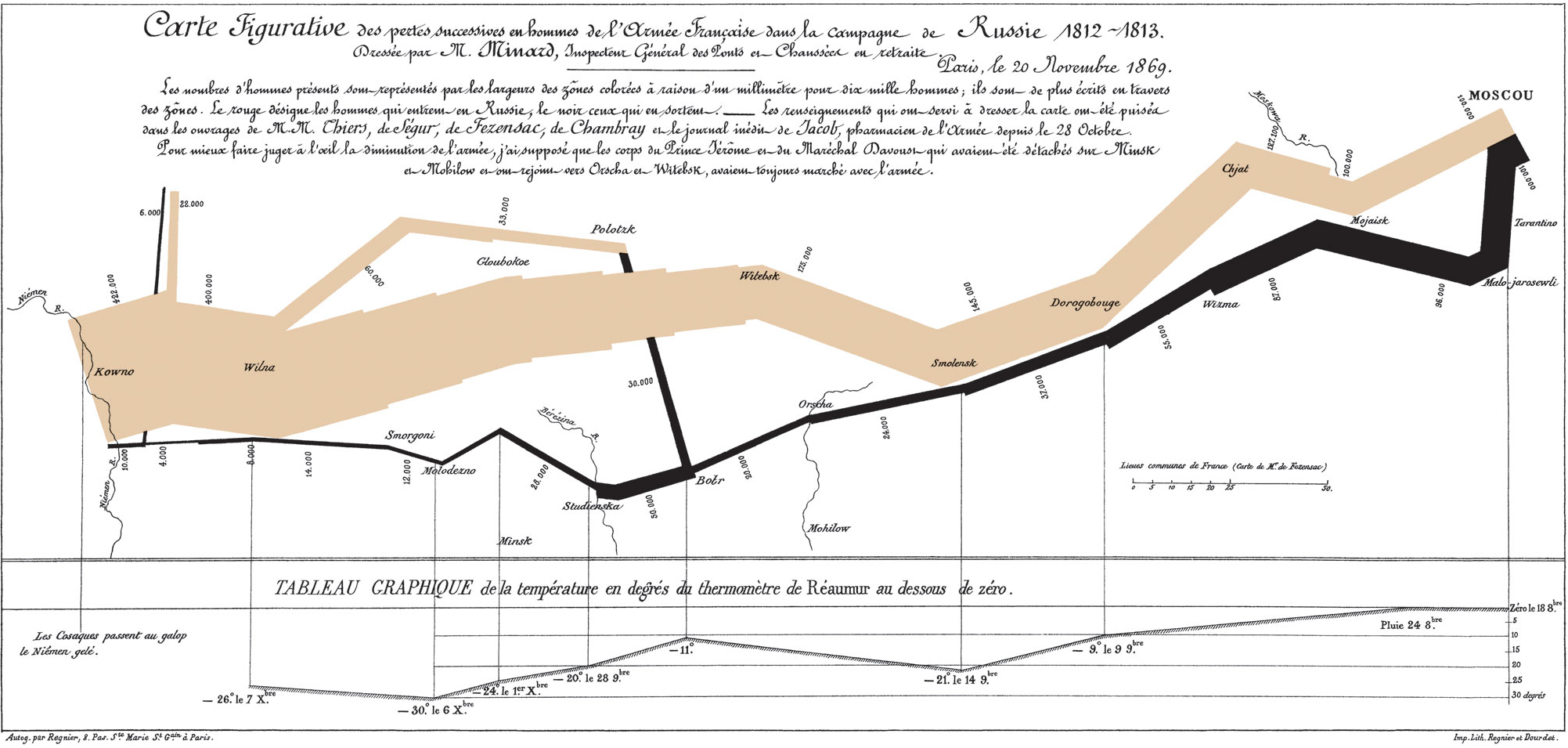
They start off here with a Minard Map from 1869, showing Napolean's Russian battles. It's supposedly one of the first infographics ever, especially showing the juxtaposition of data. The next infographic asks us to figure out which mountain in Utah would be best for an expert and then to add data to the existing graphic.
Next, they play David McCandless's TED Talk on "The Beauty of Visualization of Information."
Here was an example shown of an amazingly good infographic from The Guardian showing protests in the Middle East: http://www.guardian.co.uk/world/interactive/2011/mar/22/middle-east-protest-interactive-timeline as well as this one about privacy settings on Facebook over time: http://www.mattmckeon.com/facebook-privacy/
My seatmate went to Kathy Schrock's Infographics session yesterday and says that she gave this advice: Start with viewing and dissecting them first. Then ask what could you change to make it better or to add to enhance the graphic?
Project Ideas:
- Make an Flowchart infographic of a government function, like the Greencard application process.
- Use a base graphic showing US Immigration numbers showing spikes and drops and then assign creation of a graphic showing what predicted flow may happen in the next couple years.
Tools they showed--there are more tools on the links page at the top of this post:
Many Eyes from IBM
LucidChart
Overall, this was a good session. I like how it was hands-on. I'm not sure that I got much out of it that I would not have found on my own but it was certainly dedicated time to explore.
Showing posts with label ISTE. Show all posts
Showing posts with label ISTE. Show all posts
Tuesday, June 28, 2011


Monday, March 15, 2010
NECC 2009 Channel
 Just found out in the March/April Learning and Leading with Technology that the NECC has created "ISTEvision." This channel features recordings of several of the sessions and keynotes, some samples of digital storytelling, student voices and more. Under the "Features" channel, I'm watching "Bricks and Mortar Are Detrimental to the Future of Education" as I type this post. I'm so glad that I have the chance to see these, since I was unable to attend this year.
Wednesday, October 15, 2008
Technology Planning
Our school's 3 year technology plan expired this summer. This year, I am tasked to create a new one. It looks and sounds so simple, only three small words: create a new one. Yet the task requires herculean research, collaboration and refinement. I've started by making a plan for the plan. Yes, you read that right. One of my first steps is to research other schools' and our state's technology plan. While engaged in that step, I came across ISTE's Technology Support Project. The Bill and Melinda Gates Foundation created a process that is supposed to "identify effective technology support models for schools while taking into consideration the unique characteristics of the educational environment....The Technology Support Index (TSI) assessment is a tool for schools and districts to profile their technology support programs and to provide solutions based on those unique profiles." I'm not sure how many people have used this tool. but I did find it linked on the School Computing Wiki's technology planning page. There are some helpful web links there that I will not reproduce here, but I will share our plan for the plan:
Tentative Planning Schedule
3 Year Tech Plan
Interested Parties:
Technology Coodinator (ABD), Computer Support Specialist (PO), Lower School Director (SG), Upper School Director (LA), Head of School (JZ), Plant Manager (DH), Business Manager (AG), Development Director (DC), teachers, parents, students, church members and board members.
Steps:
Lunch with students to elicit ideas
Lunch with teaches to elicit ideas
Coffee with parents
Attend Board Meeting or just elicit ideas via email?
National Schools Research—where do you put resources?
Research existing Tech Plans (Incl. public school plans)
Work with head to articulate a mission statement.
Timeline:
November hold all lunches and meetings
December draft initial plan, including budget projections
January submit to Head and revise as necessary
February, complete and publish
Questions:
Do we need assistance with the process?
Action items from Oct 10 Meeting:
1. Develop essential questions/ reference previous examples.
2. Identify point people for each focus group.
3. Notify parents of the process.
4. Develop mission statement with Head.
5. Identify board members for input.
6. Schedule dates for focus groups in November.
Tentative Planning Schedule
3 Year Tech Plan
Interested Parties:
Technology Coodinator (ABD), Computer Support Specialist (PO), Lower School Director (SG), Upper School Director (LA), Head of School (JZ), Plant Manager (DH), Business Manager (AG), Development Director (DC), teachers, parents, students, church members and board members.
Steps:
Lunch with students to elicit ideas
Lunch with teaches to elicit ideas
Coffee with parents
Attend Board Meeting or just elicit ideas via email?
National Schools Research—where do you put resources?
McDonough (Baltimore)
Beaver Country Day School (Boston)
Collegiate (NYC)
Research existing Tech Plans (Incl. public school plans)
Work with head to articulate a mission statement.
Timeline:
November hold all lunches and meetings
December draft initial plan, including budget projections
January submit to Head and revise as necessary
February, complete and publish
Questions:
Do we need assistance with the process?
Action items from Oct 10 Meeting:
1. Develop essential questions/ reference previous examples.
2. Identify point people for each focus group.
3. Notify parents of the process.
4. Develop mission statement with Head.
5. Identify board members for input.
6. Schedule dates for focus groups in November.